Quick answer
This documentation explains how Auditious works and how to get compliant. Start with the platform guides to see how evidence automation, the auditor portal, risk management, and integrations fit together, then use the SOC 2 and framework guides to understand the standards themselves. Everything here is public, so you can learn how the platform works before you onboard.
Where should I start?
If you are new to Auditious or to compliance, this order works best:
- 1Understand the goal: read what SOC 2 is and why customers ask for it.
- 2See how the platform works: review the platform guides below.
- 3Connect your stack: learn how integrations pull evidence automatically.
- 4Prepare for the audit: follow the SOC 2 checklist to reach audit-readiness.
- 5Talk to us: book a call for a personalized compliance timeline.
Platform documentation
How the core parts of Auditious work:
SOC 2 and compliance guides
Plain-English explainers for the standards themselves:
Which frameworks does Auditious support?
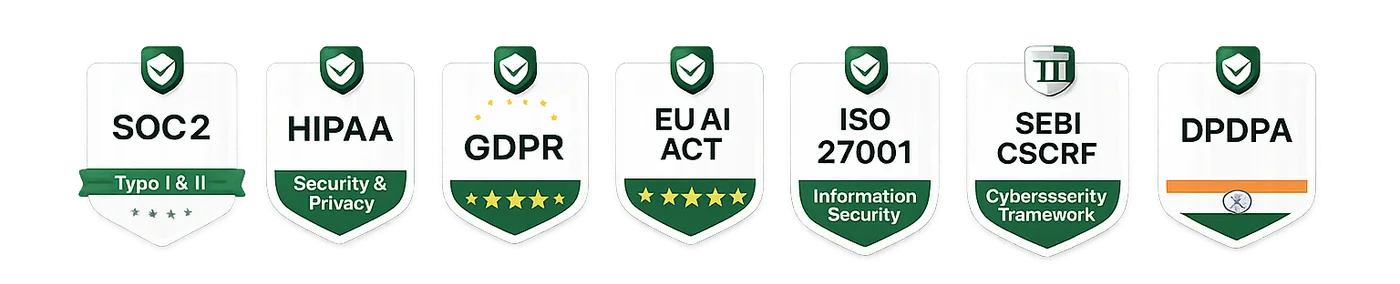
One Auditious program can cover many frameworks at once, because their controls overlap. The most common ones:
| Framework | What it covers |
|---|---|
| SOC 2 | Security and privacy controls for service organizations |
| ISO 27001 | An international standard for information security management |
| HIPAA | US healthcare data protection requirements |
| GDPR | EU data protection and privacy law |
| EU AI Act | Risk-based rules for AI systems in the EU |
| DPDPA | India's Digital Personal Data Protection Act |
One program, many frameworks
Because evidence and controls are shared across standards, adding a second framework is far less work than the first. Connect your stack once and reuse the same proof everywhere. See evidence automation for how that works.
Pricing, security, and support
Quick links to the things people ask about most:
For a deeper look at any standard, the AICPA SOC resources are a good authoritative reference alongside these guides.