Executive Summary
Evidence automation replaces manual screenshot collection with direct, API-based integrations that pull compliance proof straight from your systems of record. Done well, it cuts audit preparation from months to weeks, eliminates stale evidence, and keeps you continuously audit-ready instead of scrambling before each review.
Why Manual Evidence Collection Breaks Down
Manual evidence collection is where compliance programs quietly fall apart. Screenshots go stale the moment they're taken, owners forget which control a file maps to, and the week before an audit becomes a company-wide fire drill.
The deeper problem is that a screenshot only proves a setting was correct at the instant someone captured it. It says nothing about the days before or after. For a SOC 2 Type 2 or ISO 27001 audit which test whether controls operate effectively over months point-in-time screenshots are the weakest possible evidence.
Manual vs. Automated Evidence Collection
The difference isn't just effort saved; it's the quality and trustworthiness of the evidence itself.
| Dimension | Manual Collection | Automated Collection |
|---|---|---|
| Freshness | Stale the moment it's captured; re-gathered each audit cycle. | Reflects live system state, refreshed continuously. |
| Coverage | Sampled a few screenshots per control. | Complete every check, timestamped across the window. |
| Effort | Days of manual work per audit, repeated annually. | Configured once, then runs in the background. |
| Drift detection | Found at audit time, often too late. | Caught within hours, with an alert to the owner. |
| Audit risk | High gaps surface during fieldwork. | Low evidence already proves the full period. |
Collect From the Source, Not the Screenshot
A screenshot proves a setting was correct the moment someone captured it. An API pull proves it's correct right now. Wherever possible, connect to the system itself so evidence reflects live state, not a memory of it.
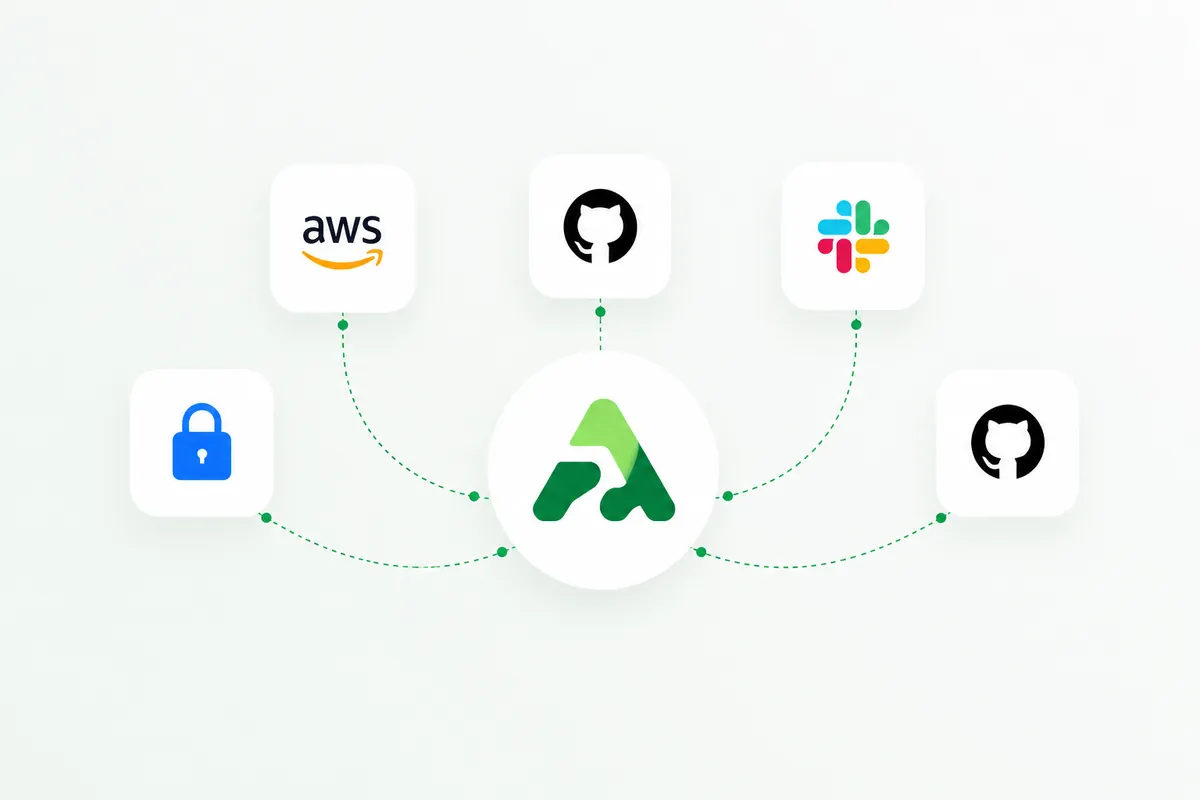
- Cloud providers: Pull configuration evidence directly from AWS, GCP, and Azure encryption, security groups, backup policies, and logging.
- Identity providers: Read MFA enforcement, SSO coverage, and group membership from Okta, Google Workspace, or Entra ID.
- Code & CI: Verify branch protection, mandatory reviews, and pipeline scanning from GitHub, GitLab, or Bitbucket.
- Device management: Confirm disk encryption and screen-lock policies from your MDM across the whole fleet.
Map Every Control to an Automated Check
Automation only works when each control resolves to a specific, testable signal. Vague controls can't be tested by a machine.
- Tie each control to a concrete, testable signal (e.g. 'MFA enforced for all admins').
- Run checks on a schedule, not just before audits.
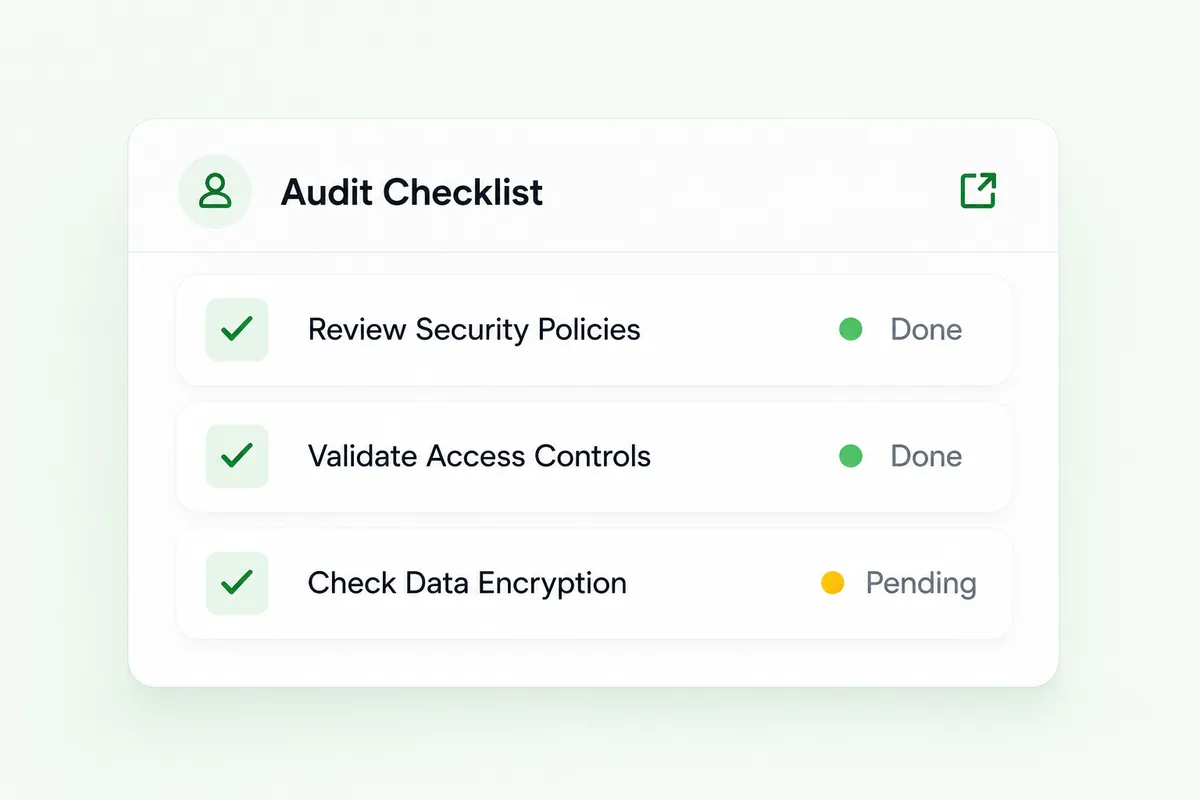
- Alert the control owner the moment a check fails, with a link to the fix.
- Keep a timestamped history so auditors can see the control held over the whole window.
Make Ownership Unambiguous
Every control needs a named owner and a clear remediation path. Automation surfaces drift instantly, but a human still has to close the loop. The best programs route failures straight into the tools teams already live in Slack, Jira, or email instead of a separate compliance portal nobody opens.
- Single owner: Assign exactly one accountable owner per control; shared ownership means no ownership.
- Defined SLAs: Set remediation deadlines by severity so failures don't linger as 'someone will get to it'.
- In-workflow alerts: Deliver failures where work already happens, with enough context to act without opening a separate tool.
Maintain an Audit-Ready Evidence Trail
Auditors don't just want today's state they want proof the control held across the entire observation period. Retain a versioned, timestamped history of every check so you can demonstrate continuous operation, and tag each piece of evidence to the framework and control it satisfies. The same encryption check can then serve SOC 2, ISO 27001, and HIPAA at once, instead of being re-collected for each.
Founder Alert: Don't Automate a Broken Process
Automation amplifies whatever it points at. If your controls are poorly defined or your access reviews are inconsistent, automating evidence collection will just document the dysfunction faster. Get the control design right first, then automate the proof.
Treat Audit-Readiness as a Daily State
The goal isn't to pass one audit; it's to be continuously ready for the next one. When evidence collects itself and drift is caught in hours, the audit becomes a review of a system that already works not a project you spin up from scratch each year. That shift, from periodic panic to continuous confidence, is the entire point of evidence automation.
Ready to stay audit-ready every day?
See how Auditious automates evidence and monitors controls continuously.